How providing clean energy for Brazil’s forest communities protects the Amazon

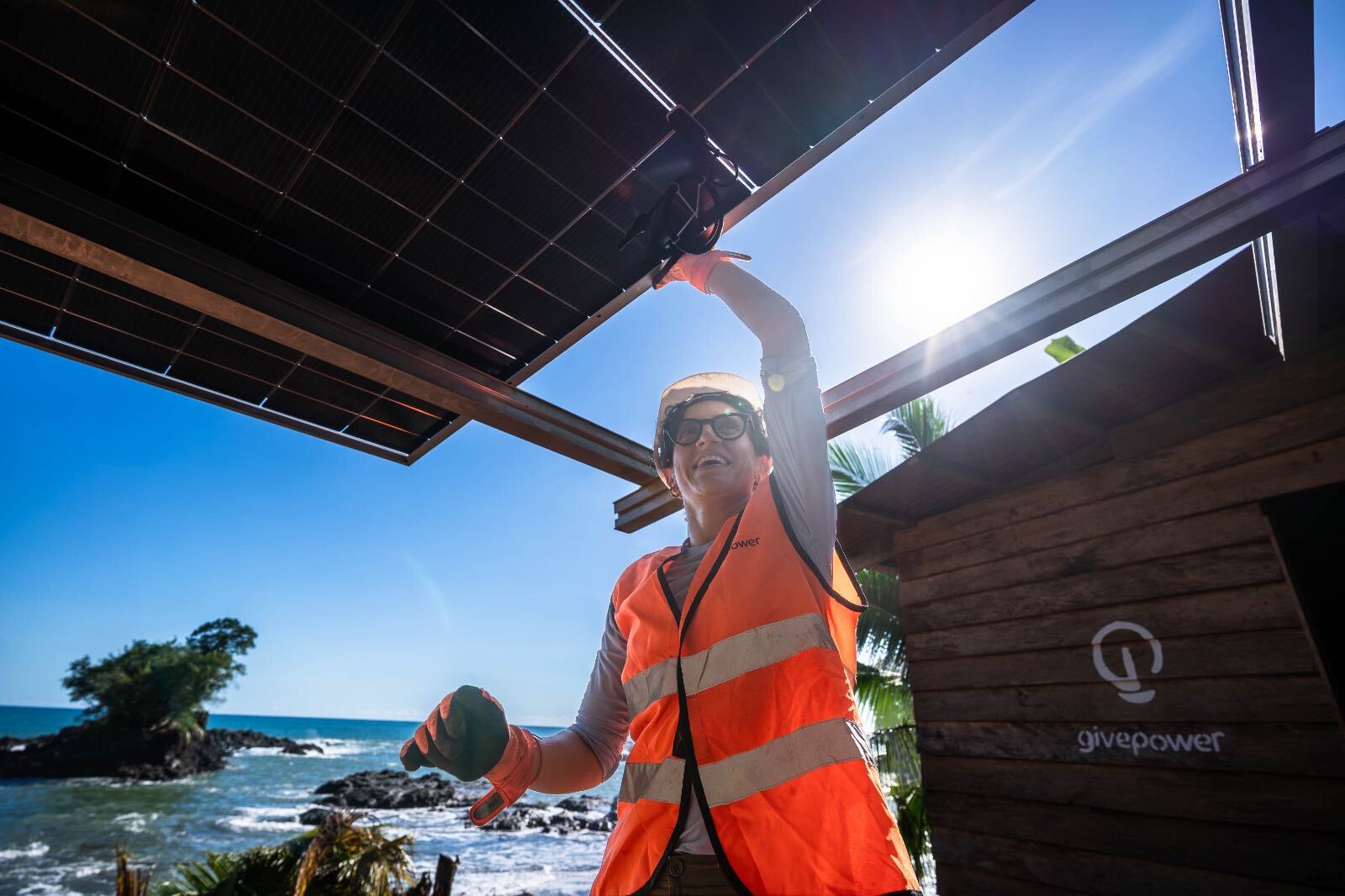
Last month, pupils at a small school in the Brazilian Amazon received their first solar panels, replacing patchy, expensive, diesel-generated power with reliable, cheap, clean electricity.
The village of Nossa Senhora do Livramento, known locally as Uixi, is a community of just 67 families spread along the northern bank of Igarapé Aiapuá, a river that feeds the ecologically important Lago Aiapuá floodplain lake and, in turn, the Amazon River.
Residents make a living by fishing for pirarucu, and harvesting Brazil nuts and açaí berries, work that earns each household around 10,000 Brazilian reais (US$2,000) a year. The nearest city and main market – the state capital Manaus – is a long day’s boat ride downriver.
The people of Uixi fish and harvest sustainably, and protect and care for the forest around them, upon which they depend. The absence of reliable, affordable energy has led to a hollowing out of many remote forest communities as people leave in search of opportunity. And when the indigenous communities whither, the forest loses its protectors. Uixi was no exception.
The tide began to turn three years ago with the installation of the first solar home systems, but individual household access is just the start. The next step is sustainable economic activity to help the community thrive.
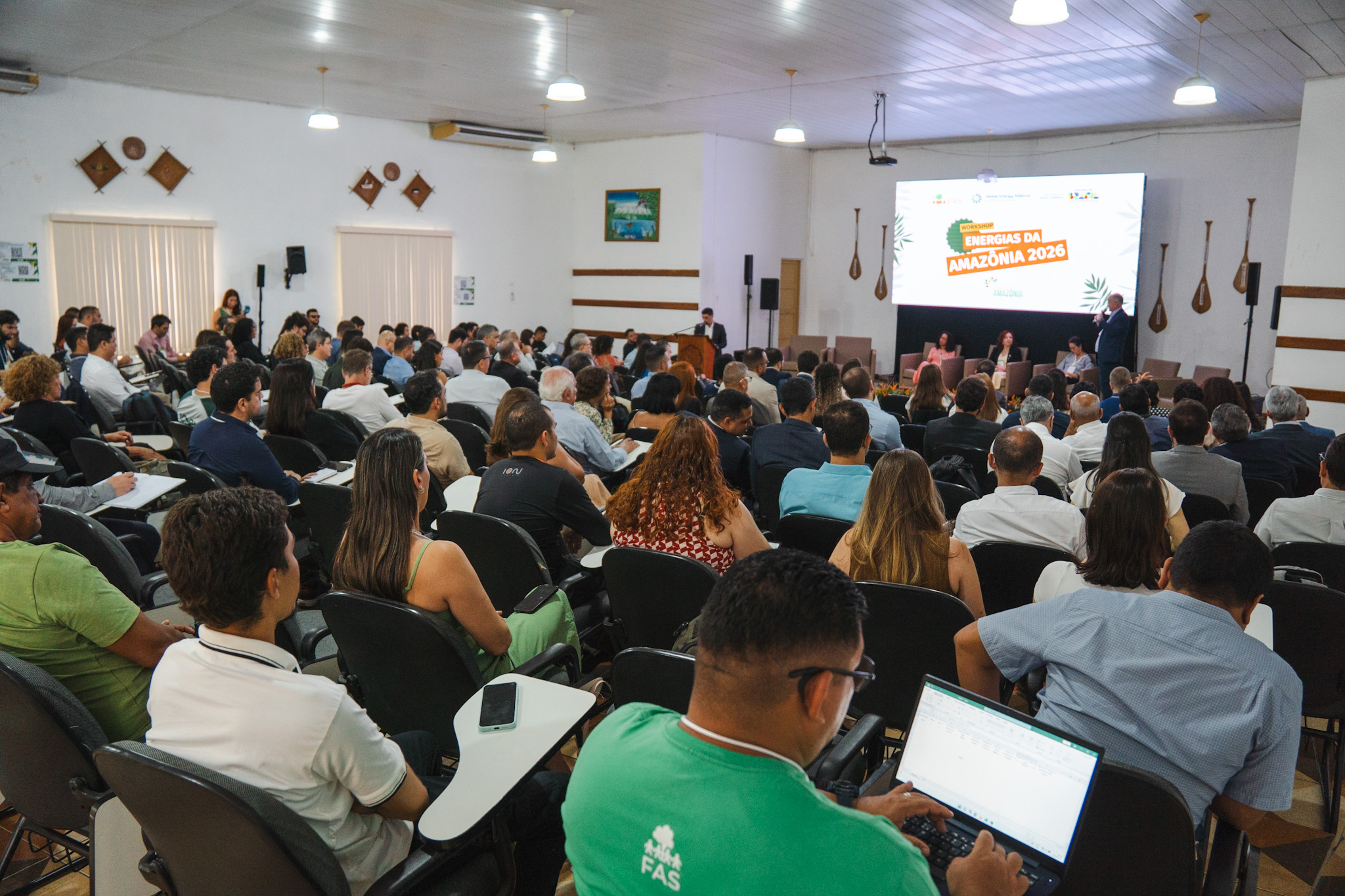
The Global Energy Alliance for People and Planet is working with the Government of Brazil in a five-year partnership to bring renewable energy, green jobs and economic opportunity to remote communities across the Amazon – advancing universal energy access, strengthening the region’s bioeconomy and accelerating an inclusive energy transition.
In Brazil, energy access has been rapidly expanding over the last decade, but reaching remote communities remains a challenge. Of the nearly one million Brazilians living without electricity, more than 95 percent are in the Amazon, where vast distances, low population density and fragile ecosystems make traditional grid expansion costly and complex. An additional two million people rely on polluting, unreliable diesel fuel, which is financed by a tariff paid for by all Brazilians on their energy bill.
Working closely with communities in partnership with local nonprofit Foundation for Amazon Sustainability (FAS), the Luz na Floresta (Light in the Forest) initiative provides not just energy access but the tools, finance and training to enable people to use the energy to thrive. Solar mini grids and battery systems are replacing expensive, polluting diesel generators, and supplementing the unreliable grid. Meanwhile tools – such as refrigerators, industrial blenders, mills and irrigation systems – will make daily work easier and more productive, enabling families to process locally harvested forest products, and preserve fish and crops.
For the people of Uixi, the project will bring a solar mini grid and battery storage to power the açaí processing machines and refrigerators that will enable them to access markets higher up the value chain and increase their incomes. The initiative is in its early stages, but impact can already be felt, in a small but significant way.
During last month’s site visit, a team from Global Energy Alliance, FAS and utility company Amazonas Energia found the school without electricity. There were no fans despite the oppressive heat, meals were made from non-perishable ingredients because the fridges did not work and students could not access digital resources. Working in collaboration and consultation with the community, the new solar panels were installed.
More broadly, Luz na Floresta also builds evidence to guide the Brazilian government’s ambitious national electrification program and offers a replicable blueprint for equitable electrification and inclusive growth in other regions facing similar challenges.
Uixi is one of nine communities in the initiative, identified in partnership with Brazil’s Ministry of Mines and Energy. Each has its own local economy – whether based on açaí production, agriculture, fishing or ecotourism – and, with it, particular requirements. All communities will be equipped to move from selling raw commodities to processed goods that command higher prices, bolstering local businesses, creating jobs and protecting the rainforest by providing viable alternatives to destructive, extractive alternatives such as cutting down trees for timber or fuel, or clearing forest for crops and grazing.
We cannot separate clean energy access from conservation of the Amazon,” says Hali McKinley Lester, Program Associate for Latin America and the Caribbean at the Global Energy Alliance. “This work matters, not just because it equips people with the energy they need for sustainable economic growth, but because supporting forest communities protects the forest.”
Explore More
-
 Brazil and Global Energy Alliance advance clean energy…Brazil and Global Energy Alliance advance clean energy…Press Release11.02.2026BrazilLatin America & Caribbean
 -
 COP30: Governo brasileiro e Global Energy Alliance unem…COP30: Governo brasileiro e Global Energy Alliance unem…Press Release15.11.2025BrazilLatin America & Caribbean
 -
At COP30 Government of Brazil and the Global…At COP30 Government of Brazil and the Global…Press Release15.11.2025BrazilLatin America & Caribbean