How Vietnam can meet rising energy demand more efficiently

Vietnam’s economic growth is creating an increasingly urgent energy challenge. As industrial production expands, cities grow and living standards rise, the country needs more electricity to sustain development. Hotter weather is adding pressure. On June 24, 2026, Vietnam’s national peak load exceeded 58,400 MW, while demand in the North passed 30,200 MW for the first time.
Vietnam will need new generation and transmission infrastructure. But the central challenge is no longer simply how much capacity the country can build. It is how effectively that capacity can be converted into dependable electricity when and where people and businesses need it.
Meeting rising demand efficiently therefore requires action across the entire power system: reducing avoidable consumption, shifting demand away from peak hours, modernizing the grid and expanding storage.
Turning capacity into dependable power
Better forecasting, digital monitoring and automation can help operators anticipate demand, integrate variable renewable generation and respond quickly to pressure across the network. Continued transmission investment will also be needed, especially as demand grows rapidly in northern industrial and urban centers.
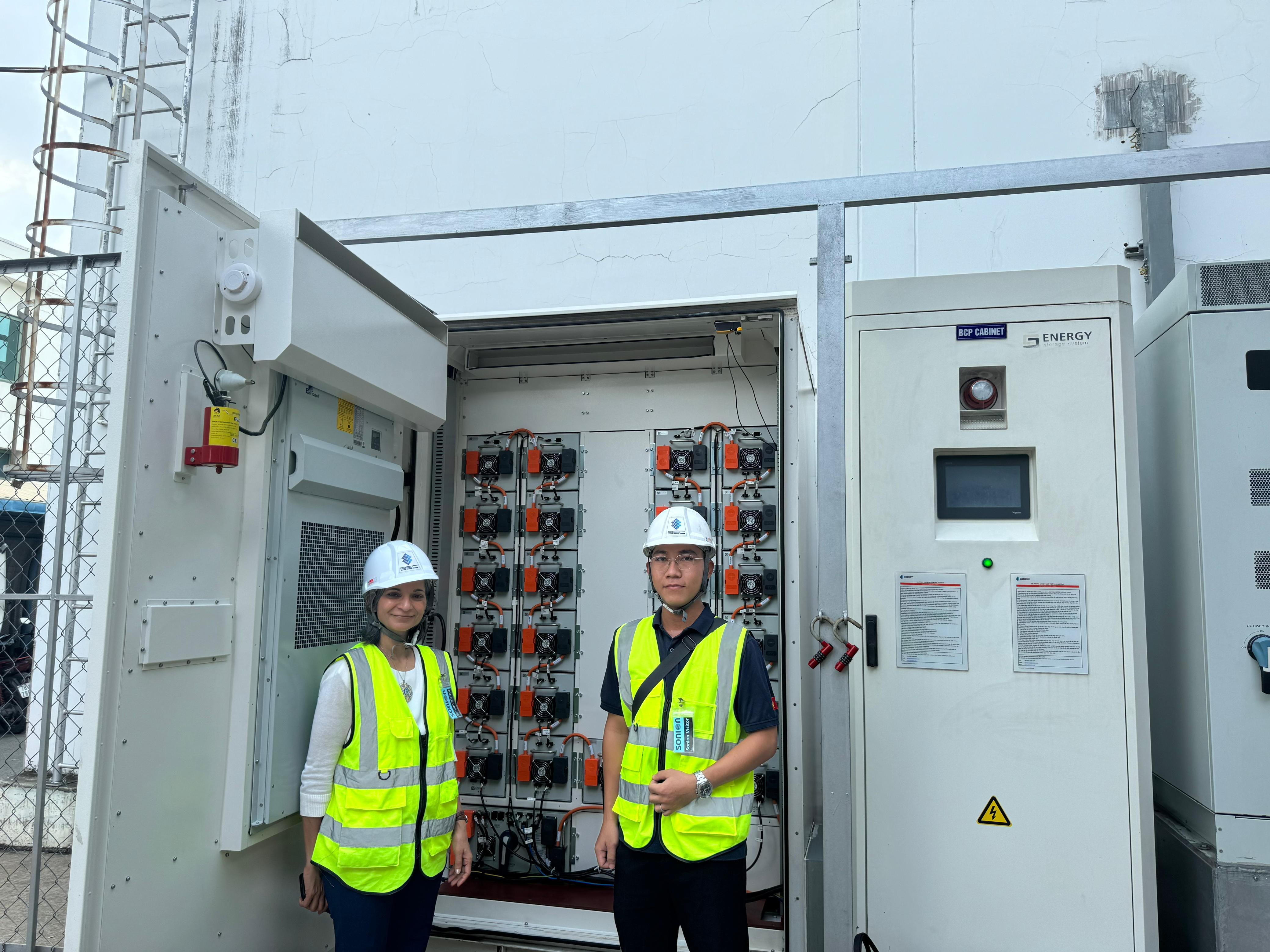
Battery energy storage systems can add another layer of flexibility. Batteries charge when electricity is abundant and discharge during periods of high demand.
They can help manage evening peaks, stabilize the grid, reduce renewable curtailment and relieve congestion in strategic locations.
Vietnam has set a target of 10,000 to 16,300 MW of battery storage by 2030. Yet installed capacity was estimated at less than 100 MW as of early 2025.
There are signs of momentum. Vietnam Electricity has proposed approximately 1,700 MW of additional battery storage. Centralized solar projects must also include storage equal to at least 10 percent of installed capacity, with two hours of storage.
The direction is clear. The challenge now is to translate these policy ambitions and project pipelines into operating assets that attract investment, perform reliably and deliver measurable value to the power system..
Closing the implementation gap
Storage projects require clear technical standards, predictable contracts, suitable locations, skilled operators and revenue models that reflect the services batteries provide.
Vietnam has made important progress in establishing this enabling framework. In December 2025, the Ministry of Industry and Trade issued Circular No. 62/2025/TT-BCT, which came into effect on 26 January 2026. The Circular establishes methods for determining generation price brackets and electricity-service prices for qualifying projects with a capacity of at least 10 MW that are connected to the national grid at 110 kV or above. This momentum continued in June 2026 with the issuance of Circular No. 29/2026/TT-BCT, which further modernizes Vietnam’s competitive wholesale electricity market by formally incorporating Direct Power Purchase Agreement (DPPA) participants, introducing a regulatory framework for battery energy storage systems, and expanding market arrangements to better integrate flexible resources.
This is an important step, but policy must now be tested through implementation. Vietnam now needs operating projects that generate evidence on performance, costs, procurement, grid services and investment structures. That evidence can reduce risk and establish replicable models that can be deployed at scale.
Closing this implementation gap will require collaboration across government institutions, utilities, development partners and the private sector, supported by the right combination of policy, technology, institutional capacity and catalytic finance.
Vietnam is already beginning to generate this practical experience. In July 2026, EVNHANOI completed the installation and commissioning of five battery energy storage systems with a combined capacity of 50 MW/100 MWh across five 110 kV substations in Hanoi, the country’s first large-scale grid-connected BESS deployment. The project will provide valuable operational experience on how battery storage can support peak-load management, enhance grid flexibility and reliability, and inform future technical, regulatory and commercial frameworks for scaling storage nationwide.
A smarter measure of progress
Vietnam’s rising electricity demand reflects economic progress. The task is to ensure that the power system can keep pace without unnecessary cost, waste or risk.
That will require a balanced strategy that includes expanding supply, improving energy efficiency, modernizing the grid, managing demand and deploying storage where it creates the greatest system value.
Ultimately, Vietnam’s next phase of energy development should therefore be measured by more than the number of megawatts it builds. It should also be measured by how intelligently those megawatts are generated, delivered and used.
Explore More
-
 ‘Made-in-Vietnam Energy’ dialogue wraps in Hanoi with focus…‘Made-in-Vietnam Energy’ dialogue wraps in Hanoi with focus…Press Release18.06.2025AsiaVietnam
 -
 Pioneering Innovation with Vietnam’s BESS Pilot ProjectPioneering Innovation with Vietnam’s BESS Pilot ProjectBlog02.08.2024Vietnam
 -
 MOIT & Global Energy Alliance Technical Workshop Advances…MOIT & Global Energy Alliance Technical Workshop Advances…Press Release21.06.2024Vietnam