Case study: Powering hope in Haiti

Global Energy Alliance case study series: Powering hope in Haiti
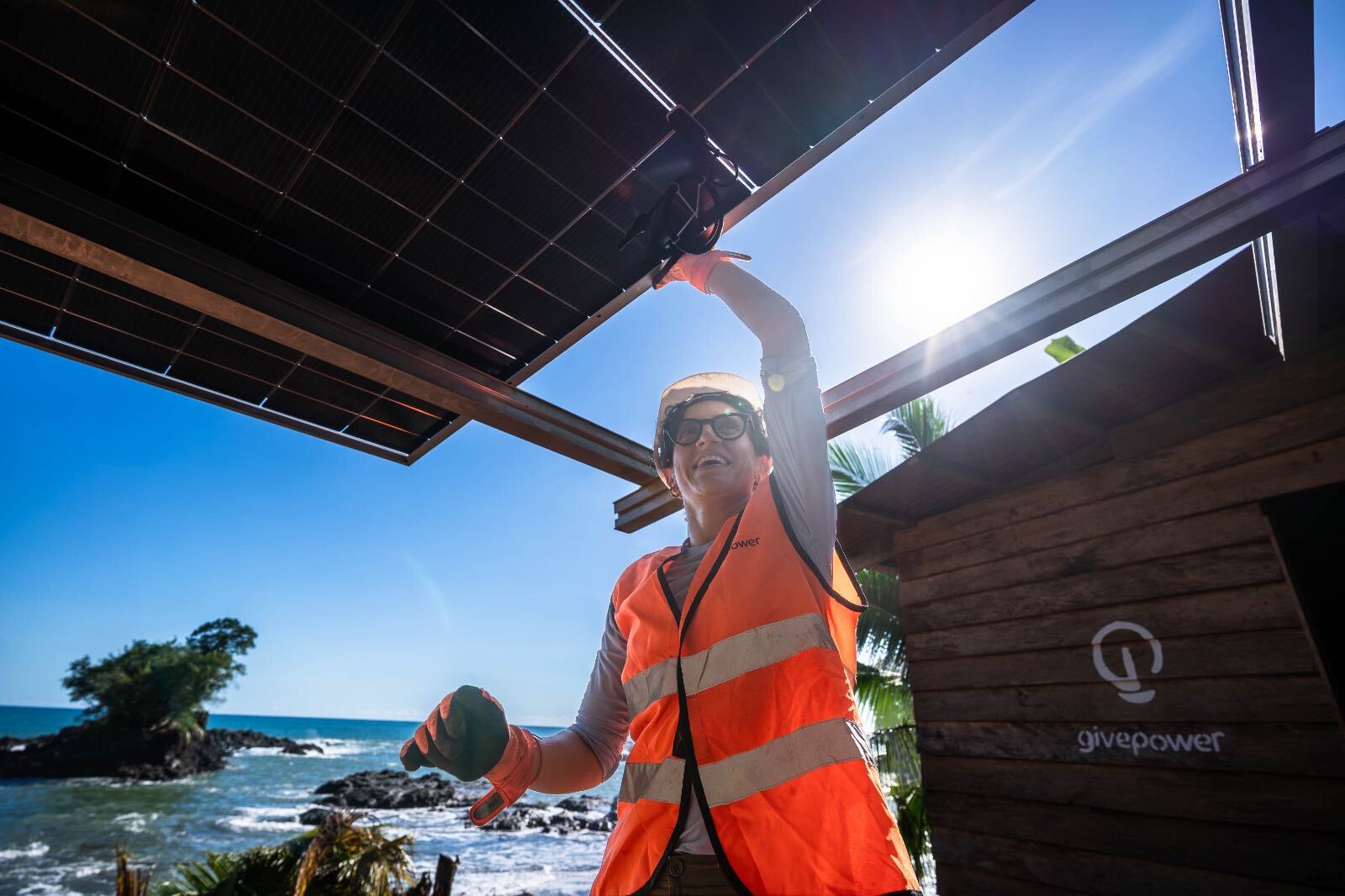
The Global Energy Alliance for People and Planet is helping people in Haiti access reliable, clean energy in rural and semi-rural areas by installing community solar mesh grids. Around 40 percent of Haiti’s 12 million people live in rural areas where the national grid does not reach, limiting their ability to earn income and grow businesses, and to access health, education and jobs.
Low-cost distributed mesh grids – made up of interconnected rooftop solar panels, batteries and meters – mean the energy benefits are shared and scaled across the community, generating enough power to satisfy households and run larger productive appliances, equipment and tools. Mesh grids are quicker to build and easier to maintain than traditional mini grids, making them ideal for hard-to-reach settings in Haiti and beyond. They also cost a third as much to install and a quarter as much to operate.
Concessional financing, alongside business and technical support, helped to make mesh grids affordable and sustainable. In a country where 98 percent of the rural population lack access to electricity, they are a pathway to systems change:
- 5,000+ households already connected to electricity
- 1,900 jobs created or improved
- $3.5 million financing unlocked
Global Energy Alliance’s catalytic intervention scaled Haiti’s mesh grids further and faster, proving their market viability. Follow-on capital unlocked a pathway to scale and Haiti is now on track to reach up to 25,000 households with electricity provided by mesh grids.
Beyond the economic benefits, electrifying remote communities means replacing expensive and polluting kerosene lamps, charcoal and firewood, with clean, cheap solar.
With mesh grids now part of the Haiti government’s Horizon 2050 national electrification plan the energy transformation is underway, providing both power and hope.
‘Powering hope in Haiti’ is part of a series of seven Global Energy Alliance case studies highlighting impact across the global portfolio. Together, they showcase a consistent model: pairing infrastructure with opportunity, aligning public and private actors and creating pathways to scale that extend beyond individual projects.
From Africa to Asia and Latin America, the series illustrates how Global Energy Alliance is translating its two pillars — Grids of the Future and Powering Opportunity — into tangible results for communities, demonstrating how clean energy can drive inclusive growth, unlock investment and accelerate progress toward universal clean energy access.
Explore More
-
 Case study: The tools that drive Africa’s green…Case study: The tools that drive Africa’s green…Case Study27.04.2026Africa
 -
 Case study: Reliable power for a modern economyCase study: Reliable power for a modern economyCase Study13.04.2026AsiaIndia
 -
 Case study: Transforming Nigeria’s energy systemCase study: Transforming Nigeria’s energy systemCase Study30.03.2026AfricaNigeria