Energy system ‘acupuncture’: small interventions, big results

The health of energy systems in Latin America and the Caribbean is improving and gradually moving toward a cleaner and sustainable future. However, big challenges remain. Aging, fossil-fuel-reliant power grids cannot deliver clean and affordable energy. Their modernization requires integrating renewables and deploying large batteries. At the same time, grids must adapt to the electrification of almost everything, including electric vehicles, smart appliances and home energy systems.
The energy transition carries risks and often involves trial and error. New battery storage systems require up-to-date regulations, robust procurement rules and added administrative capabilities. Yet, many governments lack the staff and resources to make new technologies work.
This raises a question: Who should fund this vital work?
Development banks and regional, publicly-funded organizations seem like natural candidates. Yet, these risk-averse, taxpayer-funded institutions are often structurally unsuited to finance such unproven, exploratory work. As a result, many governments in emerging and developing economies are left fending for themselves, sometimes learning through costly mistakes.
This is where philanthropic catalytic capital can play an important role. To be sure, compared with the scale of the energy transition challenge, philanthropic resources are small. But nonprofits can use their capital with agility and fund interventions that mobilize much larger investments. The goal is to reduce investment risks, help new technologies break ground, fix market failures and add clean megawatts.
At Global Energy Alliance, this is precisely what we do: energy system acupuncture. We identify where to put the needle to unblock financial, regulatory or institutional bottlenecks and help release the full potential of renewable energy and energy storage.
Three projects from our Latin America and the Caribbean portfolio illustrate this approach:
- Mobilizing $1.2 billion in investments in Ecuador In Ecuador, the acupuncture needle cost $750,000. Through the Inter-American Development Bank’s (IDB) Low Carbon Energy Trust Fund for People and Planet, Global Energy Alliance supported legal and technical work to tailor a $140 million liquidity guarantee. The guarantee cleared the path for $1.2 billion in investments for 800MW of renewable energy – a 1,600-to-1 return on every dollar.
- Unlocking $50 million for Honduras’ first battery storage system
In Honduras, Global Energy Alliance supported the government in deploying the country’s first big battery energy storage system. Some $200,000 in catalytic capital paid for power system modeling, technical work on grid integration and regulatory development. The resulting analysis showed that a 75MW/300MWh battery in Amarateca, north of the capital, Tegucigalpa, could improve grid stability and slash fuel costs by $2.6 million per year.
Although the size of the intervention was modest, its impact was key in helping the government get a $50 million project off the ground and creating a blueprint for deploying more batteries across the country.
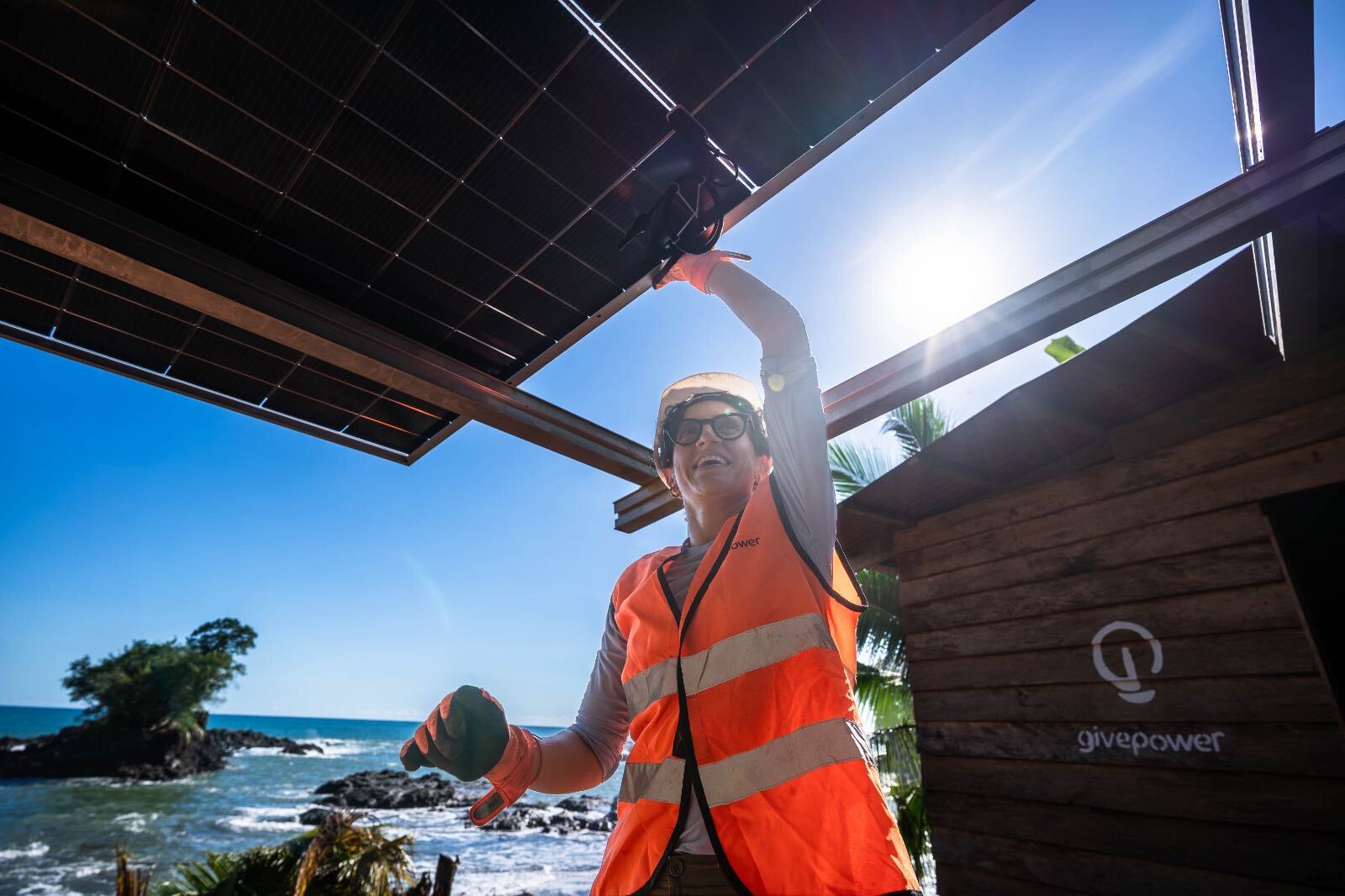
- Facilitating Barbados’ first competitive battery storage procurement Global Energy Alliance, renewable nonprofit RELP, IDB and a coalition of other partners are supporting Barbados in developing its first competitive procurement for 60MW/240MWh of battery energy storage. The initiative combines grid analysis, procurement design, regulatory support and risk mitigation. Together, these interventions have helped create the conditions to attract private capital. The resulting tender was oversubscribed five and a half times – an outcome that only a few years ago would have been unthinkable.
From needles to systemic change
These pinpoint ‘treatments’ show how philanthropic dollars can go a long way. They capture the essence of philanthropy as acupuncture: small, carefully targeted interventions at critical points in the energy system that drive systems change and create a pathway to unleashing affordable, reliable and clean energy that improves lives and reduces future emissions.
Explore More
-
 Global Energy Alliance shows how partnership powers energy…Global Energy Alliance shows how partnership powers energy…Press Release22.09.2025Global
 -
 Global Energy Alliance and Rockefeller Foundation Advance New…Global Energy Alliance and Rockefeller Foundation Advance New…Press Release27.01.2025Africa
 -
 Ministry of Energy of Brazil and Global Energy…Ministry of Energy of Brazil and Global Energy…Press Release22.11.2024BrazilLatin America & Caribbean