Energy does not merely support economic growth. It creates it.

A thought-provoking Substack post by data scientist Hannah Ritchie asks a difficult question: will Africa still be energy-poor in 2050?
Her conclusion is sobering. Even decades from now, slow economic growth means electricity consumption could remain extremely low across households and the wider economy.
It is a rigorous analysis, and one we should take seriously.
But reading it, I found myself thinking about what sits behind those projections. They assume a world where energy follows growth, where demand leads and supply follows. That logic is familiar; but it doesn’t tell the whole story.
Recently, I’ve found myself thinking about South Korea, where I grew up, and how different development can look when energy is treated as an engine of growth rather than a constraint to manage.
Today, South Korea is a thriving modern economy known globally for its shipbuilding, its car industry, for Samsung, K-pop and so much more. Internet access is ubiquitous – even on the subway.
In the 1950s and ’60s, when my father’s generation launched Korea’s economic transformation, it was a poor country with limited electricity and frequent outages. Large parts of the population had no reliable power at all. With limited economic activity, demand for electricity was low. That’s a scenario which many in Africa would recognize today.
But in Korea, demand did not come first. Instead, the country built power systems and economic opportunities together. Electrification expanded – including into rural areas (supported under broader rural development efforts such as Saemaul Undong, the New Village Movement) – at the same time as industrial policy shaped new sectors, such as textiles, steel and electronics, that created jobs and required electricity to function. Reliable power did not arrive after the economy matured. It was integral to how the economy matured.
I have also seen what happens when the energy foundation is missing. In the mid-1990s, early in my career at the Asian Development Bank, I worked through a power crisis in the Philippines. Outages stretched for hours every day. You do not need a data model to understand the consequences. Businesses slowed. Investment paused. Daily life was harder.
The Philippines too turned this around after President Fidel Ramos made energy access a national priority. But in those moments you realize energy is not just another sector. It underpins almost everything else – industry, health, education, food production, water systems and more.
What concerns me about many long-term projections is not that they are wrong; it’s that they assume low income means low demand. This is a self-reinforcing cycle.
Development, when it works, rarely follows a straight line. It involves moments when countries invest ahead of what data alone might justify. Moments when governments imagine the future they want, and build the policies to achieve it, not just react to the present they have.That is what South Korea did.
In emerging economies the scale of the demographic challenge is enormous as the next generation of workers, entrepreneurs and consumers enter the market. In Africa, under-25s make up 60% of the population. As Ajay Banga points out, in the next 10 to 15 years, 1.2 billion of them will enter the workforce. Where will their jobs come from?
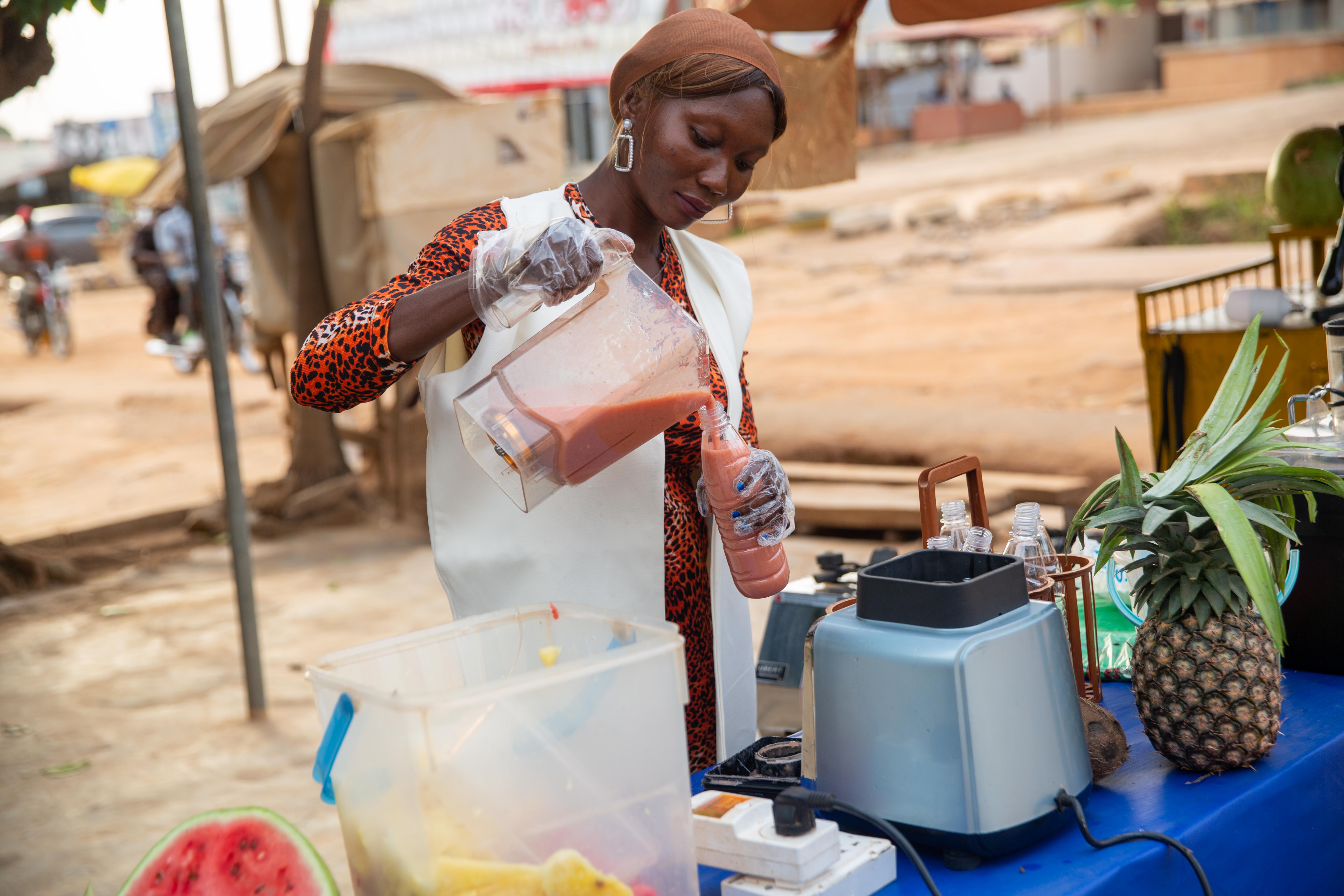
At the Global Energy Alliance for People and Planet, we see that when people have the tools, financing and training to use energy productively, jobs and economic growth follows –- stimulating further energy demand. For example, through our partnership with CLASP, we deployed catalytic capital to stimulate the distribution of solar-powered equipment – cold storage units, water pumps, rice mills – in six African countries. Our data shows it led to improved incomes, increased energy uptake and more than 20,000 new and improved jobs.
This work supports Mission 300, the World Bank and African Development Bank led initiative to connect 300 million people in Africa to reliable electricity by 2030. We’rre moving fast: Mission 300 has already brought electricity to 44 million people.
The energy landscape today is very different from the one South Korea faced 75 years ago. Renewable energy is abundant and costs are falling; battery storage is improving and digital systems are changing how electricity grids are managed. Today, we can build energy systems that are cleaner, more flexible and more resilient than ever before. But that opportunity cannot be realized if future energy supply is only planned around current demand.
If the future unfolds as current projections suggest, then Hannah is right: Africa may still be energy-poor in 2050. But this outcome is not inevitable. We just need to reposition the role of energy in economic growth.
It is said that Wayne Gretzky once said: “I skate to where the puck is going to be, not where it has been.” In energy, we cannot just build where demand is today. We must build where opportunity will be tomorrow.
Explore More
-
 Press ReleaseRockefeller Foundation, Global Energy Alliance, Clean Cooking Alliance,…Rockefeller Foundation, Global Energy Alliance, Clean Cooking Alliance,…18.02.2026Africa
 -
 Press ReleaseGlobal Energy Alliance shows how partnership powers energy…Global Energy Alliance shows how partnership powers energy…22.09.2025Global
 -
 Press ReleaseMinistry of Energy of Brazil and GEAPP Convene…Ministry of Energy of Brazil and GEAPP Convene…22.11.2024BrazilLatin America & Caribbean