Structuring for the Last Mile

For the last year, Global Energy Alliance has been working with Lightrock, Catalyst Energy Advisors, and an array of leading practitioners and innovators, to better understand bottlenecks for electrification finance in Africa, and to outline a new approach.
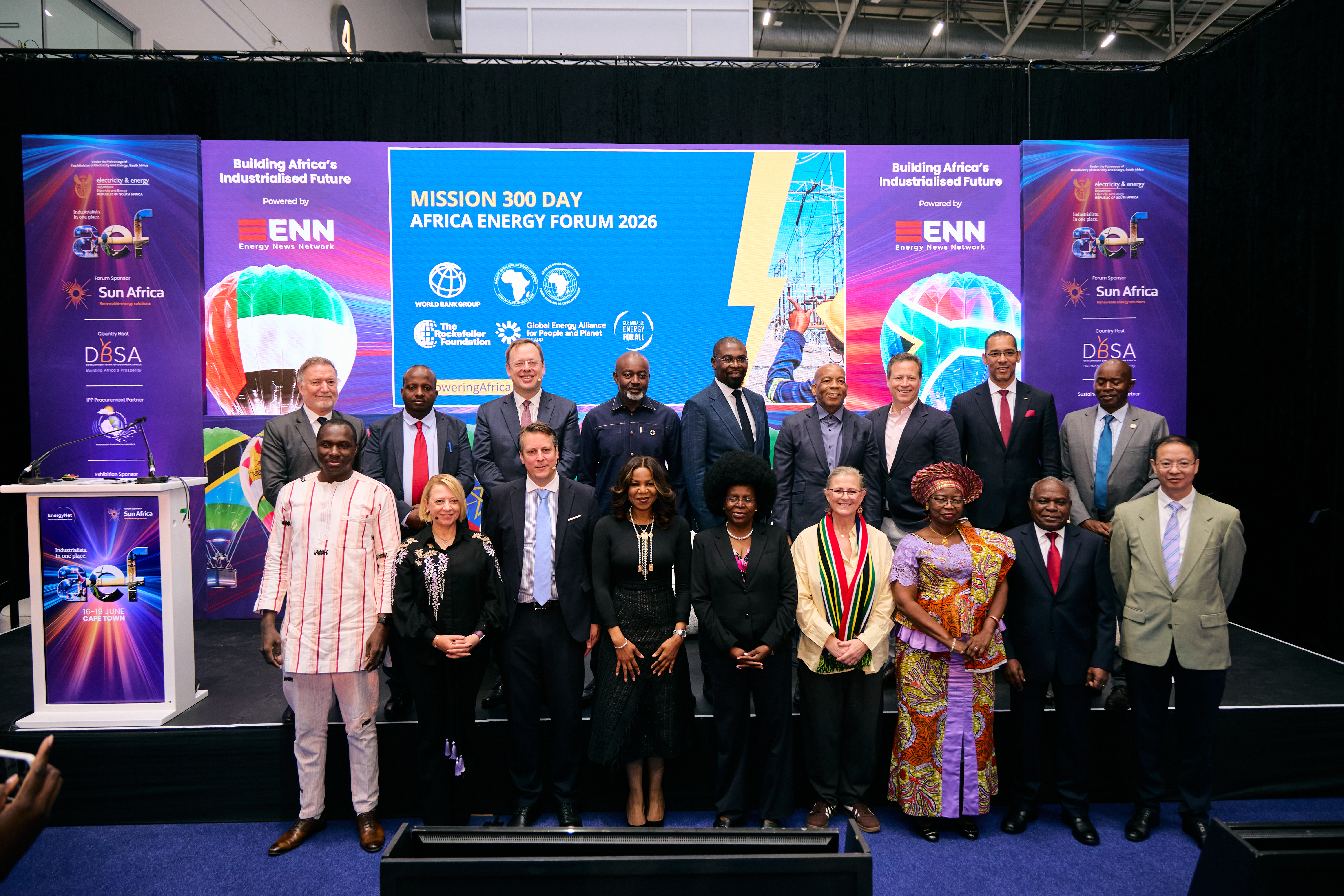
As we prepare to launch this paper, Mission 300 is announcing a major milestone, of 50 million connections achieved since the initiative launched. It’s great progress and should be lauded.
But the next 50 million connection will be harder, not easier, as countries seek to electrify ever more remote and poorer segments of the population. And electrification is not an end but a means; we think about the true goal as powering opportunity.
For these new electricity connections to achieve that goal, and for us to really be on track for SDG7, we need to achieve electrification that is universal, sustained and adequate.
Universal, meaning that we are on a pathway to providing power for all. We might not get there in the first step, but we need our actions to take us progressively closer.
Sustained, meaning that the electricity supply will still be working reliably in six months or six years. Too many have lost access from broken solar home systems or collapsed grids.
Adequate, meaning that there is enough power supplied, at a low enough cost, to enable agriculture, businesses and local industry to emerge and to compete.
We need to achieve these goals in a world where public funding is fiscally constrained, donor funding is ever rarer, and every dollar needs to be leveraged to achieve the greatest possible impact.
Yet, as our research shows, private funding for electrification has been falling. The industry calls out for “bankable pipelines”, that don’t seem to offer the scale or quality of electrification that countries are looking for.
To propose a new approach, we drew on the regulatory best practices developed over the years by the African School of Regulation’s Integrated Framework for Electrification, the long and detailed studies of real user demand by projects like eGuide, and a decade of on-ground innovation from leading developers.
The principles, we learned, can be simple.
Today, we segment regions into grid, mini grid, and standalone solar silos. But electricity demand is progressive, often starts low and changes unpredictably over time. By using a blend of grid and modular distributed renewable energy technologies to meet today’s demand, and growing supply over time, we can electrify at a far lower up-front cost.
Today, we focus on funding capital expenditure in one-shot solutions, that are either over-designed or scattered across countries to find higher-income users. But the price of long-term service is increasingly dominated by ongoing operational costs; density matters, and companies are stretched too thin. By defining service territories, with rights and obligations, we enable operators to increase efficiency, cut the cost of service and drive access to meet defined targets.
Today, we expect private operators to take on such a wide range of risks that capital isn’t available to them, or costs far more than infrastructure finance. And we expect them to cover all their costs from local tariff collections, in regions that may be simply too poor to pay for the electricity they need. By guaranteeing operational revenue, we can make projects bankable, attract investment and lock in long-term, low-cost service.
Nothing we’re proposing is novel, or untested. But the combination of these principles points to an electricity sector where governments take leadership, and structure partnerships for delivery. And where electrification is financed as infrastructure, irrespective of what technology is used in a particular household.
Each country’s application of these principles will look a little different. But we’re already part of a coalition to test the mechanisms in Zambia, under the leadership of the Rural Electrification Authority. And partners like The World Bank, MIGA, REAL, ASR, Lightrock, SEforALL, the Mini-Grid Partnership and Catalyst are looking at how these approaches could be taken up more widely
We look forward to working with these partners, and many more, in support of the next era of electrification finance in Africa.
Explore More
-
 5 Takeaways: What We Learned at the Africa…5 Takeaways: What We Learned at the Africa…Blog29.06.2026Africa
 -
 Universal energy access in Africa is within reach,…Universal energy access in Africa is within reach,…Press Release16.06.2026Africa
 -
 Under Mission 300, a new way of doing…Under Mission 300, a new way of doing…Press Release16.06.2026Africa